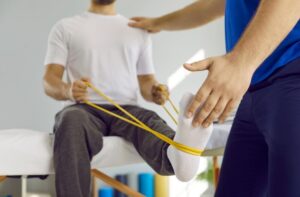

Vestibular rehabilitation therapy is a specialized exercise-based physical therapy. The goal is to help people experiencing balance disorders, dizziness, or vertigo. Instead of surgery or medications, you adjust the vestibular system by retraining the brain and how it processes signals from the inner ear and eyes.
It’s a key treatment for a balance disorder called peripheral vestibular hypofunction. It’s an impossible condition to ignore as it impacts your balance, vision, sense of place, and even energy level.
The team at Health Quest Chiropractic and Physical Therapy created a comprehensive guide to inner ear balance disorders, including peripheral vestibular hypofunction. Learn what causes them, how vestibular rehabilitation therapy (VRT) helps restore your stability, and what to expect when you make an appointment.
Understanding Your Vestibular System
Every day, your body works hard to support you with everything from breathing to getting up and walking downstairs to start your day. Many systems collaborate to ensure things go well. When one system isn’t functioning properly, it can lead to very real, sometimes scary symptoms that trigger anxiety and frustration.
Your vestibular system is a sensory system located in your inner ear. It’s key to balance, head stability, and spatial orientation. In other words, your vestibular system is the reason you stand up, understand your position in an area, position your body correctly, and move safely from Point A to Point B.
For your vestibular system to work properly, these main components work together.
- Central Processing: Teamwork between your inner ear, muscles, and eyes to ensure the brain receives correct signals for positioning and stability.
- Otolith Organs: Small organs within the inner ear that are filled with calcium carbonate crystals that sense gravity and acceleration along a straight line.
- Semicircular Canals: A trio of fluid-filled tubes meet at right angles within your inner ear to detect head movements like nods, shakes, or tilts.
- Vestibular Nerve: A cranial nerve that sends balance and motion signals from the ear to the brain.
If even one part of this system isn’t working effectively, you can experience alarming symptoms like:
- Bouncing or blurred vision, especially after fast head movements.
- Feeling nauseous or fatigued, and it may worsen as the day progresses due to the continued cognitive struggle to maintain balance or positioning.
- Finding it harder to stand or walk in crowds, dark rooms, or uneven surfaces.
- Sitting up quickly in bed and feeling like your bed is rocking or spinning.
Why Would You Need Vestibular Rehabilitation?
When your eyes, inner ear, and central nervous system no longer function flawlessly together, VRT therapy makes a difference in your daily life. It’s highly recommended for people with:
- Benign Paroxysmal Positional Vertigo (BPPV): A common inner ear condition caused by loose calcium crystals that shift into the inner ear canal.
- Central, Mixed Central, or Peripheral Lesions: Lesions in areas of the brain or inner ear that trigger vertigo.
- Elderly Dizziness: Balance and dizziness occurring as part of aging.
- Head Injuries: Traumatic brain injuries that impact the brain, central nervous system, and inner ear.
- Psychogenic Vertigo: Dizziness tied to mental health issues like anxiety or panic disorder.
- Stable Vestibular Lesions: Non-progressive lesions that have stabilized and aren’t getting worse.
- Undetermined Vertigo: Dizziness that seems to have no known cause.
When you ignore these issues, you risk having the sensitivity to movement or positioning slowly worsen. You may start to change your behavior to avoid the dizziness.
Instead of turning quickly to dodge something, you hesitate and move too slowly and end up getting hit. You know that fast movements make you feel dizzy, so you stop aerobic activities, worsening your health in other ways.
The problem keeps worsening, and you’re starting to find yourself losing balance when you stand or turn too quickly. You end up falling, which puts you at risk of a bone fracture or serious head injury.
How Does VRT Help With Dizziness and Poor Balance?
Vestibular rehabilitation therapy involves exercises that help retrain the brain using neuroplasticity. What this means is that exercises are used to help the brain reorganize how it processes new information. A combination of the following exercises teaches your central nervous system to compensate for the changed function.
- Balance and Gait Training: Patients work on balance training in specific scenarios to help retrain the body to maintain stability without relying on the eyes for help. Exercises may include standing on one foot or with one foot directly in front of the other with the eyes closed or walking in a line while slowly turning the head to the side. It retrains the body to maintain balance and stability during movements.
- Canalith Repositioning: Patients perform a series of head and body positions. It helps with any loose crystals that have fallen out of the inner ear into the semicircular canal.
- Gaze Stabilization: Patients perform eye exercises where they focus their eyes on a specific object on a wall while slowly moving their head. At all times, the eyes must be positioned on that object. It helps keep images sharp when the head moves.
- Habituation Training: The triggers that cause dizziness are determined. It might be standing up quickly after bending over, a scrolling computer screen that suddenly stops, or a moving crowd in a mall. Patients undergo controlled sessions with the specific trigger to desensitize the brain’s reaction.
What Should You Expect During Your First Visit?
Most people are nervous when they enter a medical office for the first time. Our team understands that fear and uncertainty, so expect to come here and find a friendly environment where you end up feeling right at home.
We start by taking a thorough history of your symptoms. Expect to answer questions like:
- What symptoms concern you?
- Where were you the first time you felt the dizziness or other symptoms, and what were you doing at that moment?
- How long do the symptoms you experience last?
- Do you find specific motions trigger the sensation?
Once we’ve discussed your symptoms and experiences with you, we move on to the physical exam. This may include:
- Balance and Gait Testing: The therapist puts you through different exercises to observe your balance and gait as you move from one position to the next. You usually do some movements with your eyes closed and others with your eyes open.
- Oculomotor (Vision) Screening: Your therapist observes how your eyes move as you track an object. You may wear infrared goggles (Frenzel lenses) that stop you from being able to fixate your gaze, which makes it easier to determine if you have involuntary eye movements. This helps determine if the issue is occurring in your brain or inner ear.
- Positional Testing: You may be asked to move in specific ways to trigger a vertigo episode under the therapist’s careful supervision.
What Does VRT Recovery Look Like?
It’s important that you don’t expect immediate improvement. It takes time before improvements are noticeable.
When you first begin home exercises, you may find your symptoms or dizziness worsen. This is normal and an essential part of the therapy. If you’re uncomfortable doing them alone, have a family member or friend with you when you complete them.
You’ll find the increased discomfort usually lessens within 15 minutes. It does depend on your particular situation.
- The Cause: BPPV often resolves within three sessions, while TBIs may need several months of continued VRT.
- Consistency: How often you do the exercises is key to a successful recovery. It takes repetition for your brain to learn how to appropriately respond to triggers or movements.
- Use of Medications: If you use vestibular suppressant medications, it can impact your recovery. It often takes longer because your central nervous system is under a sedative effect.
How to Choose a Qualified Vestibular Specialist
When seeking care for dizziness, inner ear imbalance disorders, or vertigo, talk to a doctor for guidance on finding a licensed physical therapist with training in vestibular rehabilitation.
Don’t hesitate to ask about their experience with VRT, particularly with:
- Balance and gait training
- Canalith repositioning maneuvers
- Gaze stabilization
- Habituation exercises
You want to make sure that the therapist you work with builds a treatment plan using your specific diagnosis instead of a one-size-fits-all program. Make sure a nystagmus evaluation or video-oculography is completed first.
No one should struggle to get through a day because they can’t shake inner ear imbalances that trigger dizziness, fatigue, improper head positioning, nausea, and spatial orientation problems. Schedule an appointment with Health Quest today.